“J’aimerais un café allongé, s’il vous plaît,” I ask without a second thought.
A couple of minutes later, a barista responds to me in English.
“Your flat white is at the end there.”
As I walked to pick up my drink, I wince at the blow to my ego. Is my American accent still that obvious? I wondered. I hadn’t even ordered a flat white.
Six years earlier, armed with intermediate French and a pandemic-era extended-family exemption to cross Canada’s mostly closed border, I had touched down in Montreal.
On paper, I was competent in Québec’s official language. But my confidence ebbed and flowed depending on the day and the task. After timid attempts with everyone from baristas to landlords, I’d often ask my then-Montrealer partner to do things for me.
Since then, I’ve lived in Luxembourg and France, handling everything from opening bank accounts to applying for residency in my second language. So I was stumped that, back in Québec, I couldn’t even manage a coffee order.
“Café long,” corrected the barista, reminding me of how bilingualism in Montreal manifests. It’s normal to switch between languages at any establishment, often within the same conversation. The soundtrack to any meal is a series of multilingual discussions.
A colonial present
Canada is a country with two official languages, French and English. But in Québec, Canada’s largest province, French reigns as the sole official language.
The French language’s dominance has its roots in Canada’s colonial history and the struggle between the French and British invaders.
The French first colonised Québec in the early 1600s, when the explorer and cartographer Samuel de Champlain established a fur-trading post in a region he nicknamed La Belle Province.
Over the next few centuries, Britain and France aggressively conquered North America, wresting control from the indigenous peoples who had previously inhabited the continent. The French colonialists came primarily from Poitou in central France and Normandy, in the northeast, creating a unique linguistic makeup within the infant colony.
Eventually, however, a standardised Québécois French emerged and maintained its independence from the British English that was taking root throughout Canada.
After France lost the French and Indian War to Britain in 1763, it ceded control of the area to the United Kingdom. But many of the region’s French inhabitants remained.
For centuries, the French- and English-speaking inhabitants largely avoided one another, living in separate parts of the province, with clear boundaries between them. According to Alissa Bonneville, a Québécoise language teacher in Montréal, French speakers mostly lived in rural areas and small towns. Cities, meanwhile, tended to have a higher percentage of English speakers.
The separation between the two groups in Montreal was the Boulevard St. Laurent, one of the city’s main thoroughfares. The boulevard runs from Montreal’s old port through the plateau, eventually terminating at the Prairies River. It is colloquially known as “The Main,” and has long been considered the confluence of Montreal society. Today, it is a bustling avenue lined with popular eateries that blend the city’s diverse cultures.
Québec’s quiet revolution
Until the 1960s, residents of Québec spoke both English and French throughout the province. But an unofficial social divide had emerged. Anglophones held the majority of white-collar jobs and management positions, while Francophones held mostly blue-collar or clerical jobs.
The centuries-old tensions between French and English speakers in Québec eventually led to the development of the province’s strict language laws and policies.
The Quiet Revolution of the 1960s, a period of socio-political transformation, created a French-speaking middle class. That allowed the province’s French speakers to exert themselves in a landscape previously dominated by English. During that same period, a large separatist movement began to emerge in Québec. Today, the Bloq Québécois, a nationalist political party, still campaigns on a “Québec first” motto.
With pro-French sentiment building, French was made the province’s only official language in 1974. Three years later, the Charter of the French Language, widely known as Bill 101, was passed to protect the language.
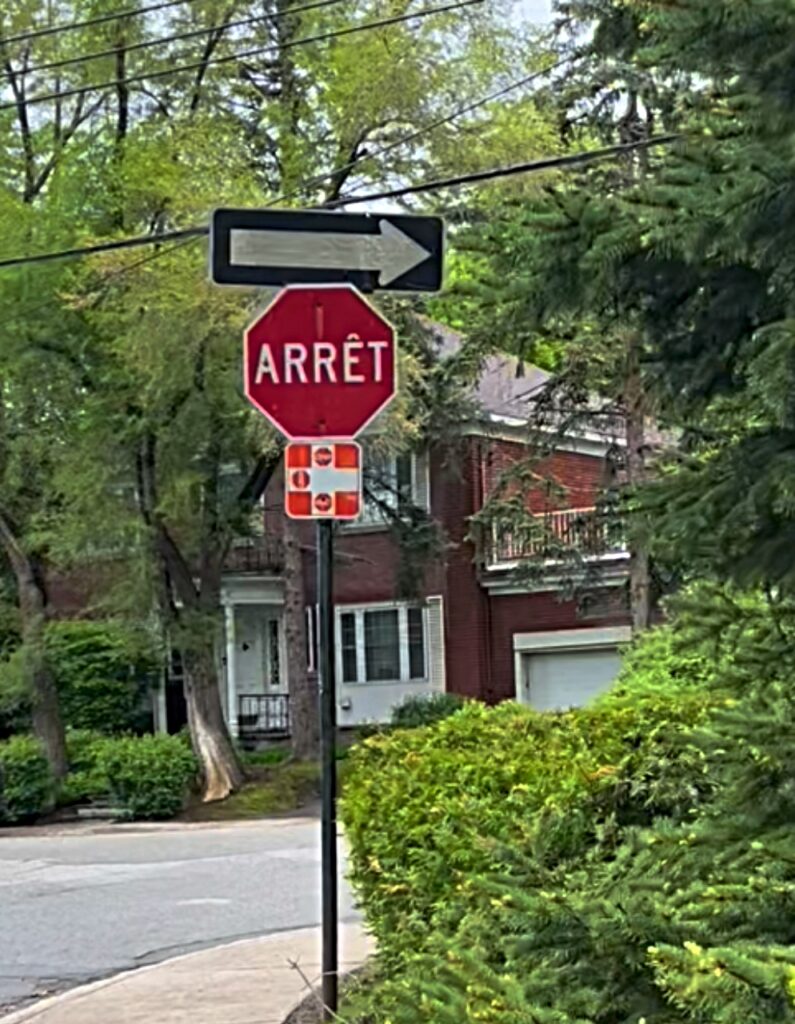
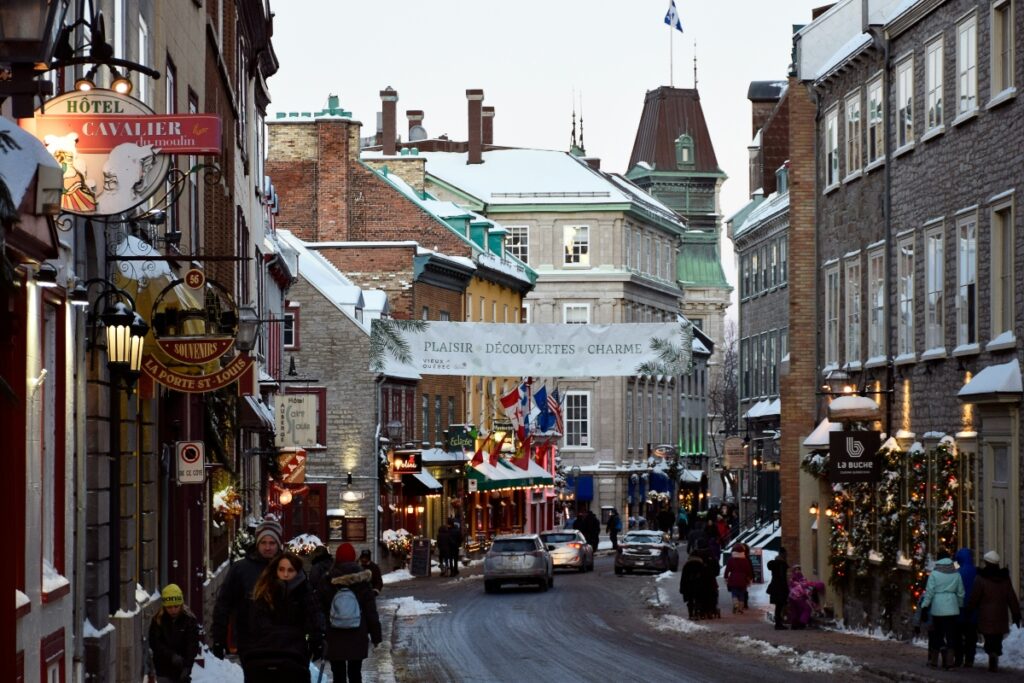
The law requires all businesses to display signage in French. Québec today is the only place in the world where stop signs read “arrêt.” Even in France, “stop” is the norm.
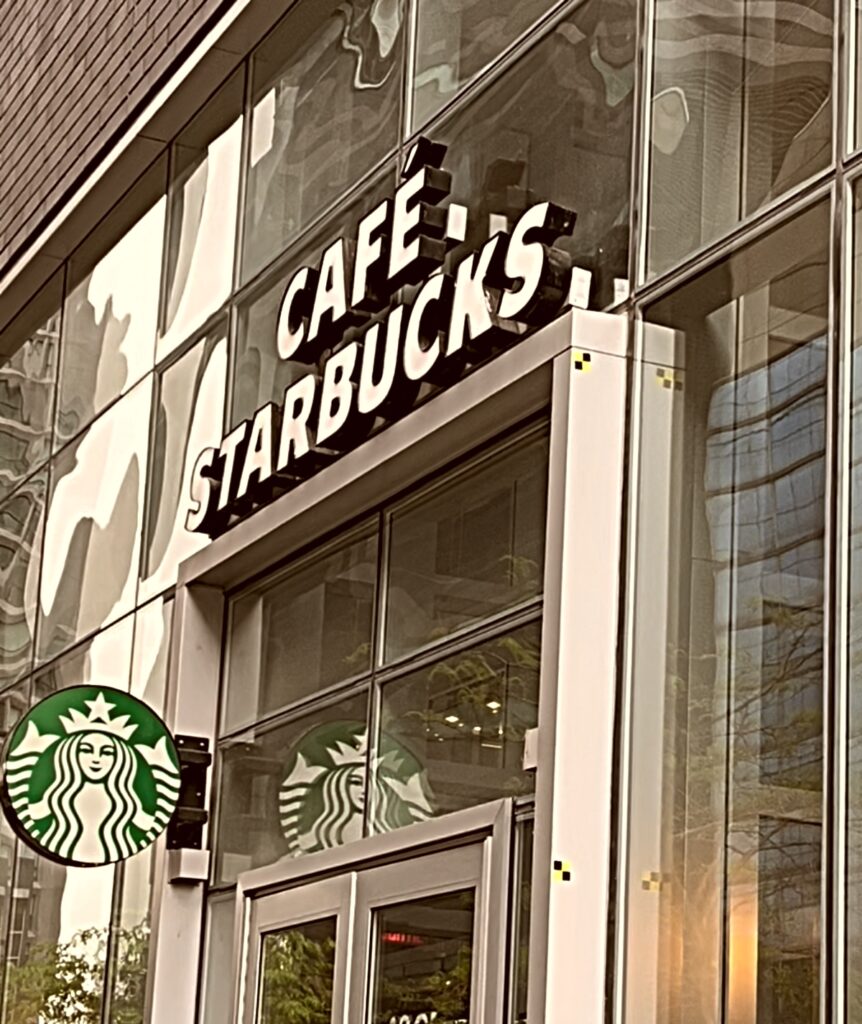
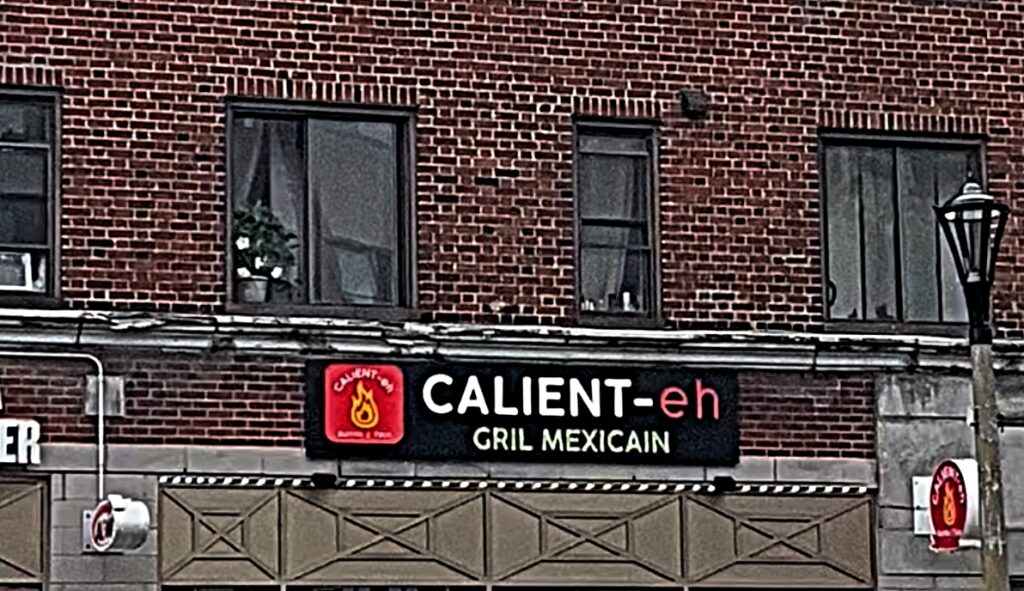
In the mid-1980s, Québec’s government established a surveillance commission, or language police, which sent undercover agents to ensure businesses complied with language laws. One of the most famous instances of language policing took place about 12 years ago, when the government fined an Italian restaurant for failing to translate the Italian names of its dishes into French.
An unofficial bilingualism
Despite the strict enforcement of the laws, people in Québec often find creative ways around them.
And in Montréal, the province’s largest city, people working in shops often greet you with the bilingual phrase Bonjour/Hi. That gives you, the customer, a choice of which language to pursue.
Meanwhile, Québec’s French is influenced by years of separation from France and proximity to English. For example, “un chum,” the word for a boyfriend in Québécois French, comes from the English word “chum,” which means friend.
When the British took over Québec in 1760, they severed Québec’s connection to France, stopping linguistic time in its tracks. Today, Québécois French is still a version of French that existed in the 17th and 18th centuries. While some words have adapted, they did so separately from the French language in Europe and elsewhere.
Joual, a variety of Québécois French that includes unique grammatical patterns and English-derived words, originally emerged as the language of the French-speaking working class in Montreal in the 17th and 18th centuries.
That can make it complicated for native French speakers from France or elsewhere to understand native French speakers from Canada.
As a native English speaker who learned the language from French teachers, I frequently struggled to understand French speakers in Québec. These days, I still need an hour for my ear to adjust to l’accent Québécois after crossing the border.
Québec’s linguistic future
Like its history, Québec’s linguistic future remains full of juxtaposition. Montréal’s current mayor has called for changing the city’s standard greeting from “Bonjour/Hi” to “Bonjour” only.
In 2022, the provincial legislature passed Bill 96, which gives new immigrants only 6 months to learn French and limits access to English-language services in places such as courts and medical facilities.
Some exceptions are occasionally made for indigenous peoples, immigrants in their first six months, and those who exclusively communicated with the civil service in English before May 13, 2021.
Since French is the default language of instruction, students must apply to attend school in English and receive special permission. Even if children obtain a certificate to study in English, they cannot graduate without a high level of written and spoken French.
Despite the strict pro-French rules and atmosphere in Québec, there are reasons to believe that US President Donald Trump’s threats to annex Canada have brought the province closer to the rest of the country. Québec’s voters recently threw their political weight behind Prime Minister Mark Carney, who has taken a strong stance against Trump, rather than voting for the Quebecois nationalists whom many in the region typically support.
I noticed more Canadian flags on my numerous trips north of the border this year, particularly in Montreal. I also saw numerous “fièrement Canadien” (proudly Canadian) labels on products and in stores, which were rare until recently.
Sydney Baker is a travel writer from the Pacific Northwest who has lived in Australia, Québec, Luxembourg, and France.