Myat* smokes one cigarette after another. He’s sitting on a plastic chair, staring at the field in front of him as he recalls the past.
“You know, I can’t properly move my left leg. The guards beat me so hard when I was in prison in the 90s,” said the thin 65-year-old. “They locked me up after the 8888 uprising.”
Myat is wiry, with a sharp, almost elegant temper. Like many Burmese men of his generation, he participated in the protests that erupted in Myanmar on August 8, 1988. Students, monks, and ordinary citizens flooded the streets to challenge the Burma Socialist Programme Party (BSPP), which had ruled the country since 1962.
During those demonstrations, a new leader emerged: Aung San Suu Kyi, the daughter of the assassinated independence leader Aung San, who had resisted British colonial rule in the 1940s. The Lady, as they called her, fought against the military dictatorship and advocated for democracy, human rights, and civil liberties.
The student-led protests in the 1980s ushered in a new political era in Myanmar and ended the BSPP’s rule. In 1990, the government held the first multi-party democratic elections in decades. Suu Kyi’s party, the National League for Democracy (NLD), won by a landslide.
But the country’s military junta refused to recognize the results. Instead, they arrested Suu Kyi and persecuted all dissenters. Several decades of military rule and violence followed, dragging men like Myat into the chaos.
From Myanmar to America
While people like Myat spent time in jail, others – like Aung*, a 55-year-old man with grey hair and a missing eye – joined the armed resistance against the regime.
Aung joined the All Burma Students’ Democratic Front (ABSDF), an opposition group that operated an armed wing. The ABSDF fought alongside other opposition groups, including the Kachin Independence Army and the Karen National Liberation Army, both armed ethnic groups fighting for independence from the junta.
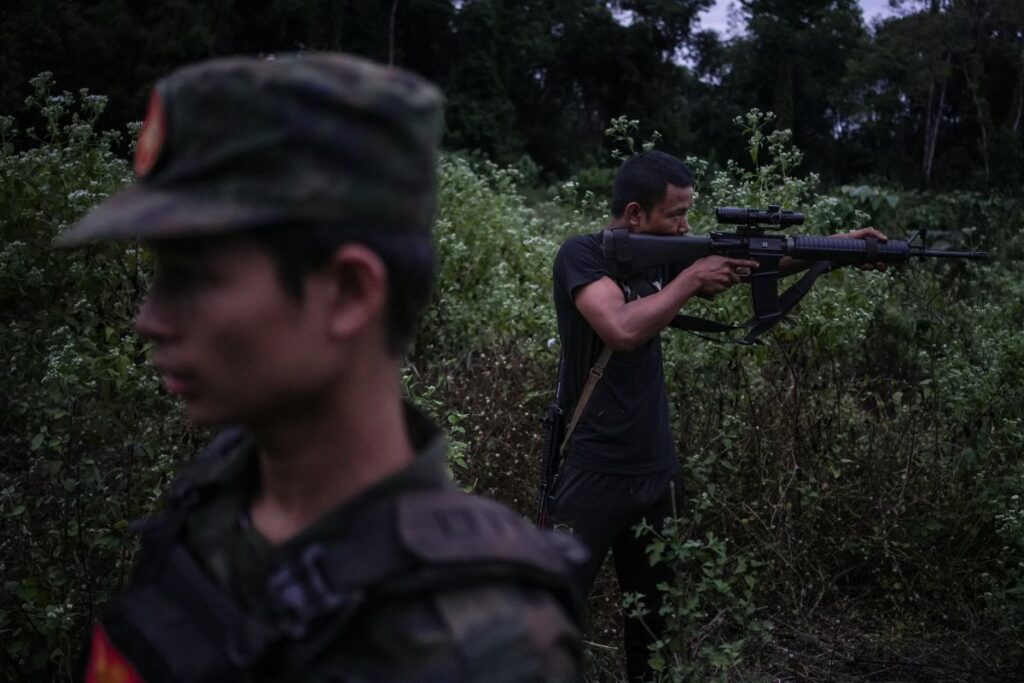
“I basically spent all of the 90s fighting in the jungle against the junta along the Thai border. Guerrilla warfare against a much stronger enemy,” Aung explained. “In Karen State, where I was stationed, that was daily life.”
By the late 1990s, however, Aung was displaced to Thailand, where he applied for refugee status. Eventually, he resettled in Fort Wayne, Indiana. Myat followed a similar path after serving thirteen years in prison. He was ultimately released in 2004 and moved to Fort Wayne as well.
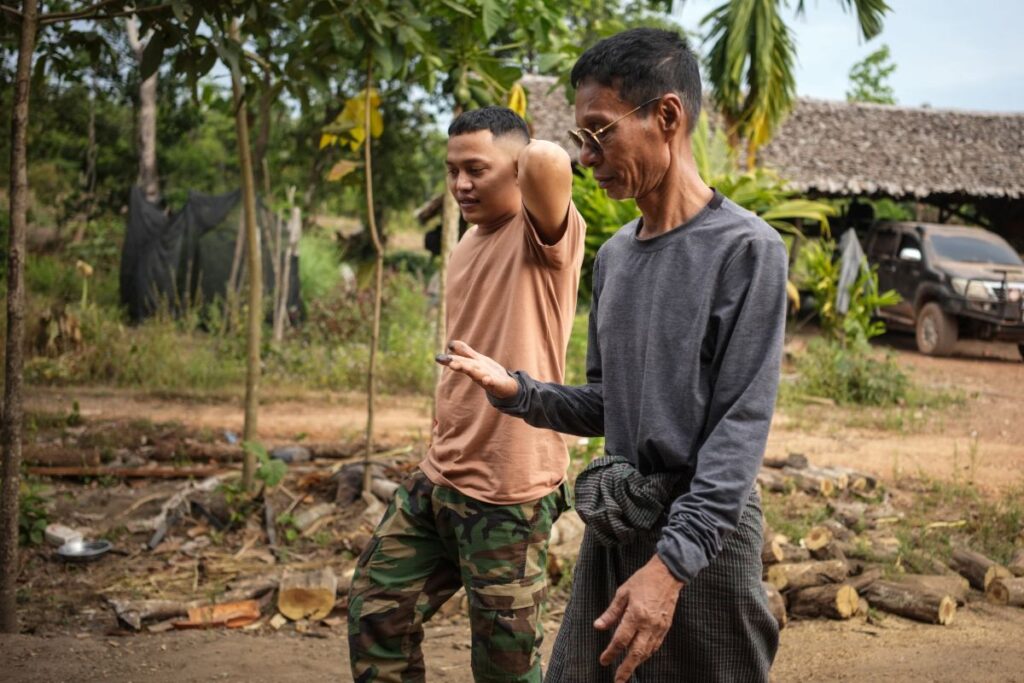
In America, both men started from scratch. They worked as machine maintenance technicians, got married, and raised their children in the U.S.
“We didn’t know each other back in Myanmar, but in Fort Wayne, there is a large Burmese community,” said Myat. “We found each other there, became friends, and of course talked a lot about Myanmar.”
But even after everything they had endured, life in the U.S. brought its own hardships.
“In Myanmar, families live closely together, surrounded by warmth and support from neighbors. In the U.S., it’s not like that. I felt I couldn’t belong there,” Myat said.
The hardest part, both men recalled, was learning a new language and living in a country that never truly felt theirs.
“I couldn’t leave my past behind. Our country is still under the regime’s oppression after the price we paid fighting the junta,” said Aung.
‘My country has nothing’
Under pressure from the international community and experiencing immense economic need, Myanmar’s political landscape began to change again in 2011. The military started implementing reforms gradually, and in the 2015 elections, Suu Kyi’s NLD party won.
Suu Kyi led a civilian government that shared power with the military for several years. Although the truce was uneasy and tensions persisted, many believed it was only a slow start toward democratic reforms in Myanmar.
Nevertheless, after a period under Suu Kyi’s leadership, the military seized power again in 2021. The Lady was imprisoned again. Like in 1988, people flooded the streets in protest.
“This time it was different,” said Aung. “In 1988, only a few groups decided to fight. In 2021, the whole country, almost all armed factions, stood their ground.”
Aung argues that Operation 1027, which took place in October 2023, truly shifted everything. All the resistance groups across Myanmar joined forces in the country’s largest offensive in modern history.
“Nothing like that existed in 1988. Just incredible,” Aung said.
Myat and Aung decided to return home, leaving behind their jobs and families in the U.S. Myat has three daughters in Fort Wayne, aged 18, 17, and 11.
“My family has everything in America, but my country has nothing,” he said. “That’s why I came back. My family understood.”
Starlink, mobile phones, and drones
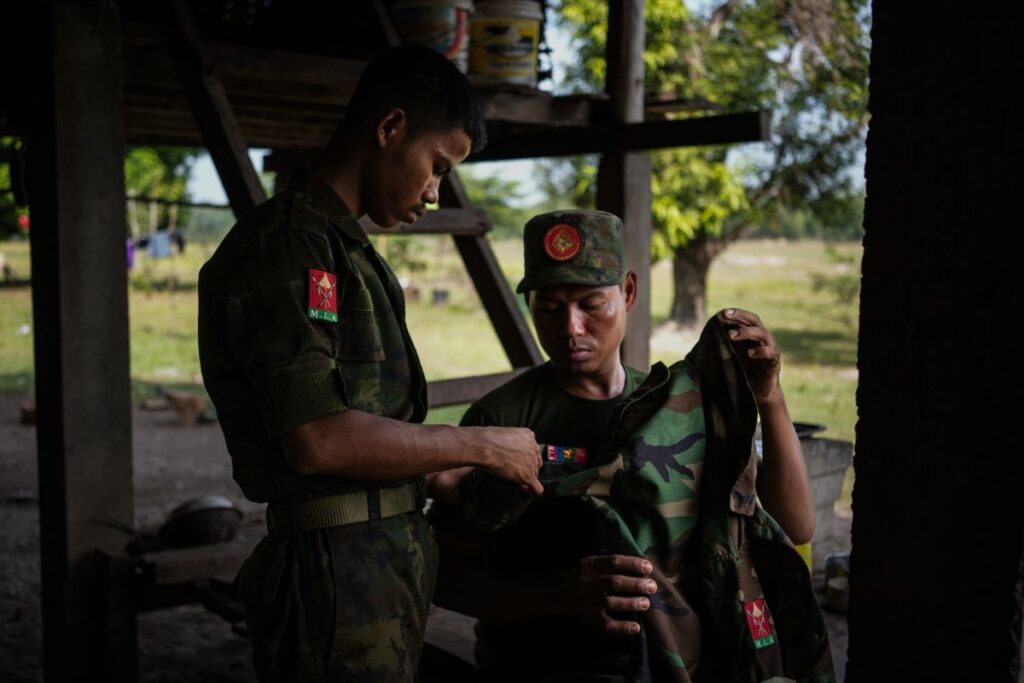
In 2021, the year the military grabbed control of the country once again, the two refugees returned to Myanmar to finish what they had started in 1988. They wanted to assist the new generation with the experience they gained during their years of resistance. Myat brought his political and communication skills. Aung contributed his military expertise.
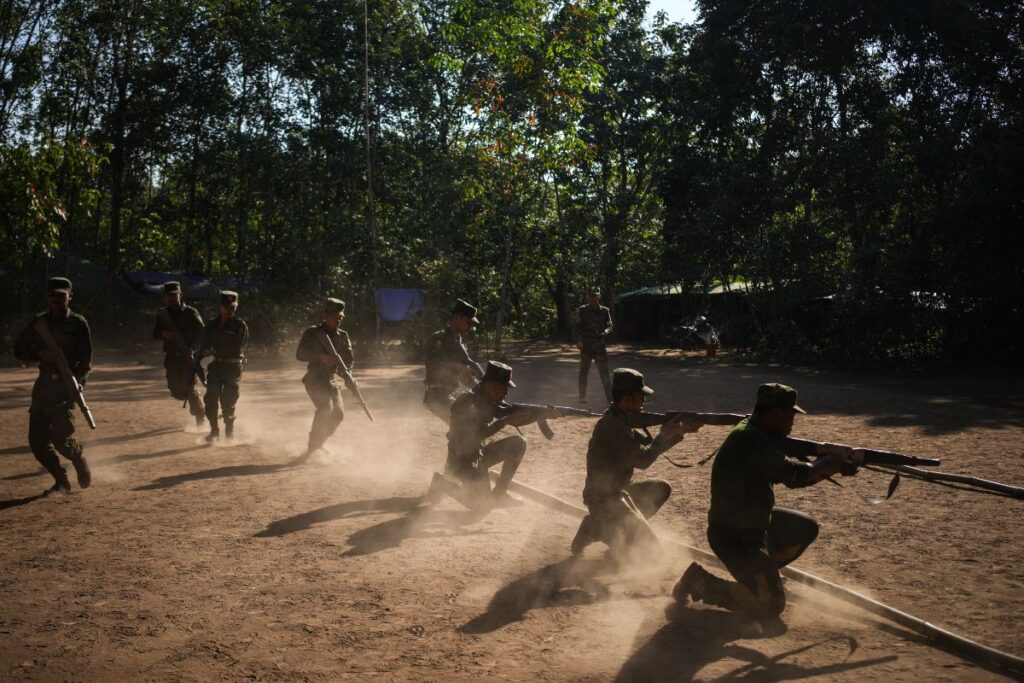
A seasoned soldier, Aung now commands a branch of the Mon People’s Liberation Army (MPLA), which has joined forces with other groups in the Karen area. His missing right eye is a reminder of a battle fought in 1992, a different kind of war, when only a few groups, outnumbered and under-equipped, took up arms against the regime.
Back in Myanmar, both men quickly realized how much both the war and the country had changed. Many of the jungles that once offered shelter have disappeared.
“Where there used to be jungle, now there are roads,” Aung said.
Meanwhile, technology has become one of the biggest game changers on the battlefield.
“In my time, we only had rifles and a few radios. That was it,” Aung described. “Now we have Starlink, mobile phones, and drones.”
A new generation of fighters has also emerged, tech-savvy and often highly educated.
One example is Htet*, a thirty-year-old former aerospace engineering student from Yangon. Like many other young people, he joined the resistance after the 2021 coup, bringing valuable technical expertise.
“I had some contacts in the Karen region. I asked if they were interested in forming a drone unit, and they immediately said yes,” he said. “Honestly, my background is more academic than practical, but I learned by watching YouTube videos. There’s plenty of material out there.”
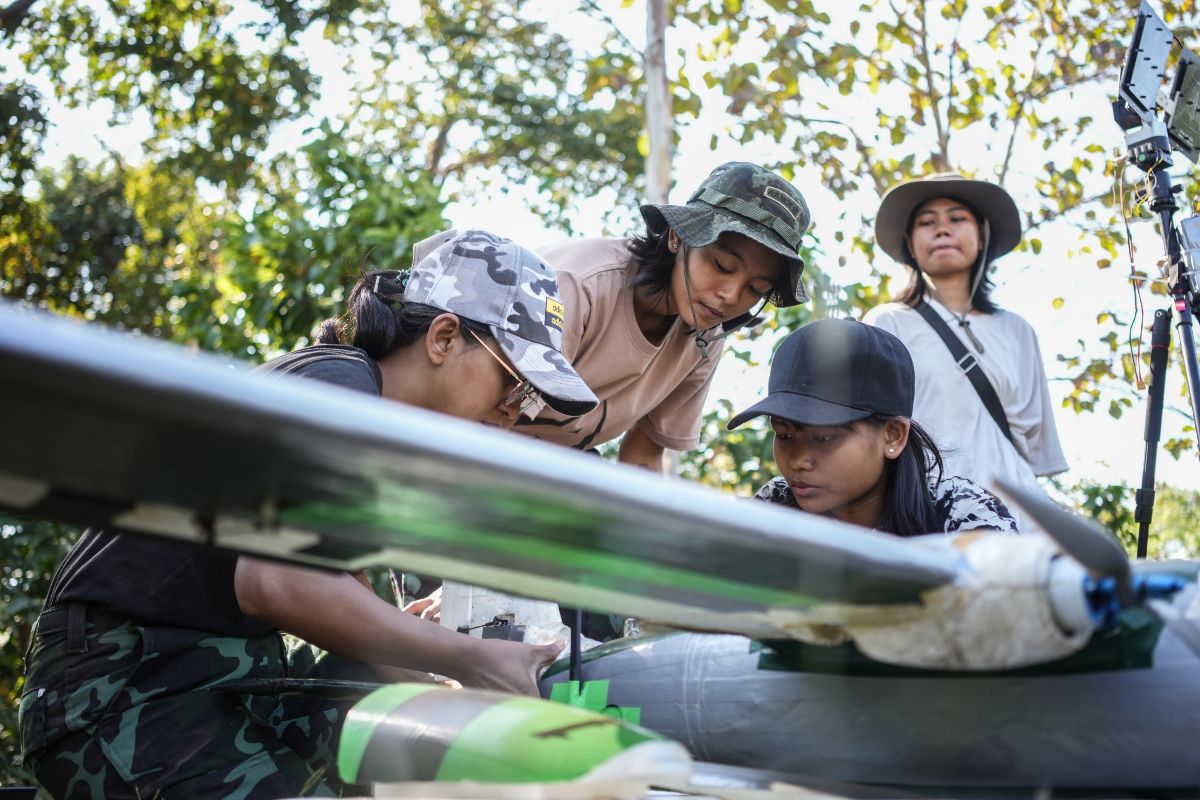
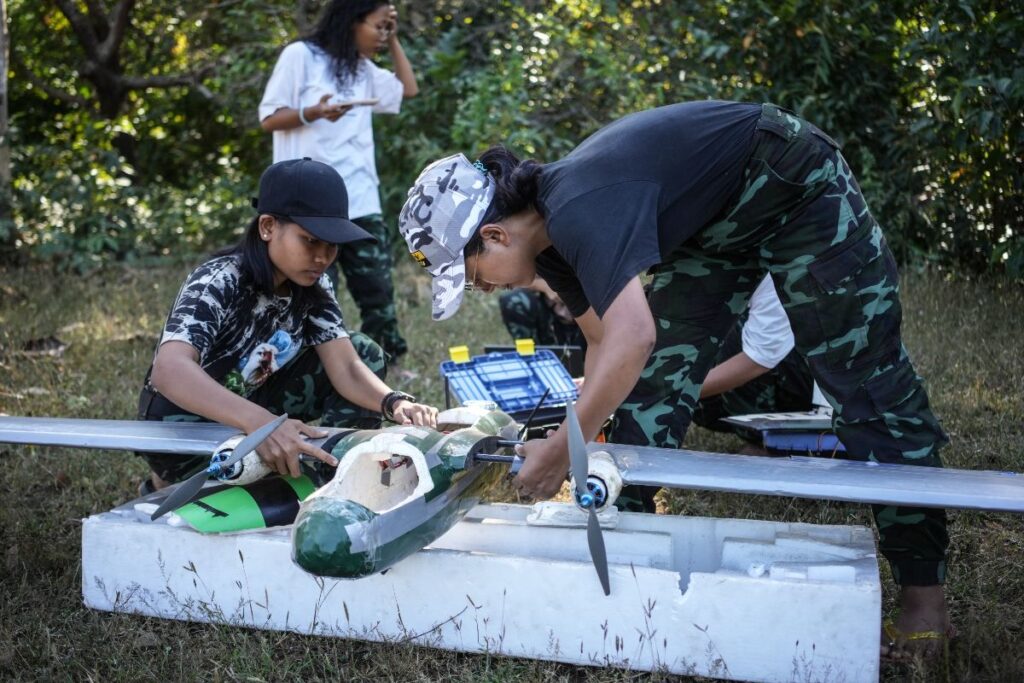
In the ongoing conflict, drones have proven their effectiveness on the battlefield. The resistance uses drones for surveillance, reconnaissance, and even attacks on vehicles and military targets. But the challenges go beyond learning how to use them.
“Unlike the regime, we don’t have sophisticated UAVs. Our entire setup costs around $1,000 per drone, while the enemy’s costs about $20,000. We buy parts online – from sites like Alibaba or Lazada – and smuggle them into the country,” Htet explained.
A new generation
Deep in the forest, at their base camp, Htet now trains others in drone flight and navigation. In one case, he’s training an all-female team.
“My parents were very traditional and terrified of the army, so they stayed silent in 1988. I didn’t want to do the same,” said Mya*, a 27-year-old teacher from Yangon who now serves as one of the team’s drone operators.
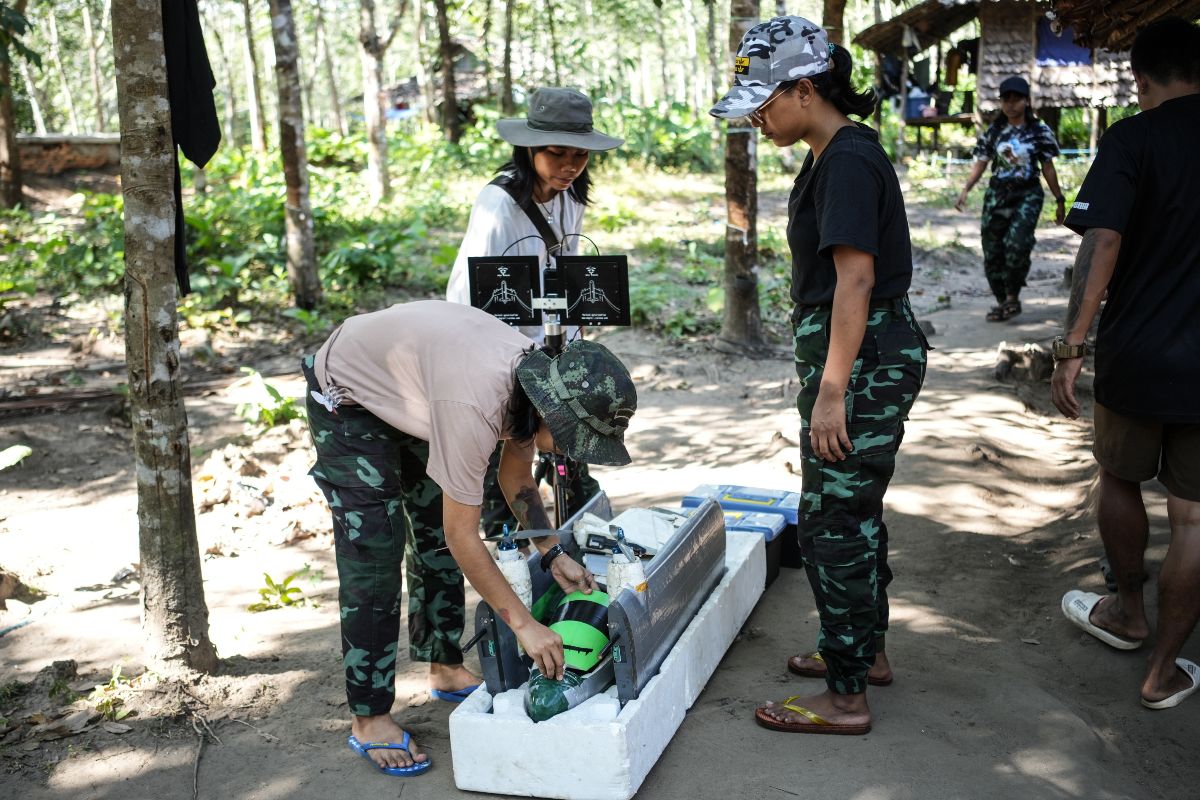
In her previous life, Mya taught in a primary school. When she heard that the army was shelling schools in rebel-held areas, she decided to join the resistance. She joined with her fiancé, who is also her high school sweetheart.
Women like Mya are not only fighting the junta but also defying deep-rooted gender norms.
Burmese society remains deeply traditional, and women are often expected to limit themselves to housework and childcare. Serving in an all-female combat unit is a revolution in itself.
Despite their different backgrounds, one thing connects the generations of 1988 and 2021: a willingness to sacrifice their lives for their country’s good.
“I left my family in the U.S., knowing there’s no turning back,” Myat said. “Over there, I have three children, but here, I feel like I have 300 kids. We could never abandon the children here. I came here to win this war or die trying. I’m doing it for them, but also for me.”
Mya said she feels similarly.
“I joined the resistance knowing I couldn’t go back to Yangon and be a teacher again,” she said. “It was a one-way ticket. My boyfriend and I are ready to die to bring freedom to our country.”
*Names have been changed to protect the identities of the individuals interviewed.
Matteo Latorraca is a journalist with experience reporting from multiple crisis areas, including Ukraine, Myanmar, Nigeria, and Tunisia. His work focuses on geopolitics, conflict, and social change.